A comprehensive understanding of hair vocabulary is often considered indispensable for achieving fluency in English, building upon the foundational terms introduced in the preceding video. This expanded lexicon facilitates more nuanced discussions concerning personal grooming and aesthetic presentation, allowing for greater clarity in daily interactions. Mastery of these specific terms empowers individuals to articulate precise hair conditions, styling preferences, and maintenance routines with enhanced confidence and accuracy. Such linguistic proficiency transcends mere memorization, enabling a more profound engagement with the subtleties of the English language.
When English is being learned, the practical application of new vocabulary is paramount for retention and fluid communication. The simple act of describing one’s hair or a hair care routine presents numerous opportunities for language learners to practice and internalize a rich array of descriptive words and action verbs. Through a systematic approach, learners can transition from basic descriptions to a more sophisticated command of hair-related terminology, greatly enriching their overall communicative repertoire in English.
1. Deciphering Hair Conditions: Beyond Just ‘Messy’ and ‘Tangled’
While the video aptly demonstrates the basic concepts of “messy” and “tangled” hair, the English language offers a considerably broader palette for describing various states of human hair. When hair is merely disarranged, it is frequently described as “tousled” or “disheveled,” suggesting a natural, perhaps even charming, untidiness rather than extreme disorder. A state of extreme entanglement, however, might be more accurately conveyed with terms like “knotted” or “matted,” which imply a more severe degree of intertwining that requires considerable effort to resolve.
Considered a significant challenge for many, hair that is “frizzy” is characterized by a lack of definition and an abundance of fine, unruly strands that stand away from the main body of hair, often exacerbated by humidity. In stark contrast, hair exhibiting excessive oiliness is commonly referred to as “greasy,” indicative of an accumulation of sebum that gives it a heavy, somewhat unwashed appearance. Conversely, hair that feels rough and brittle to the touch is typically labeled “dry” or “parched,” often resulting from environmental stressors or insufficient moisture, demanding targeted hair care solutions.
The condition of hair frequently reflects an individual’s grooming habits or environmental exposures, much like a canvas displays the effects of an artist’s technique or a prolonged period in storage. For instance, “limp” hair lacks volume and body, falling flat against the scalp, whereas “voluminous” hair possesses significant lift and fullness. The continuous effort involved in maintaining desired hair conditions is a testament to the intricate relationship between personal care and aesthetic presentation, requiring a nuanced vocabulary for accurate articulation.
2. The Lexicon of Hair Manipulation: From Combing to Coiffing
The simple action of “combing” the hair, as shown in the video, represents just one fundamental aspect within the vast array of techniques utilized for hair manipulation. This particular action is primarily employed for detangling strands and aligning them neatly, often serving as a preparatory step for more elaborate styling processes. Beyond merely untangling, hair is often “brushed” to smooth its surface, stimulate the scalp, and distribute natural oils or applied products evenly throughout its length, contributing to its overall health and luster.
The broader concept of “grooming” encompasses a comprehensive set of practices intended to maintain the cleanliness, health, and aesthetic appeal of one’s hair. This holistic approach typically involves washing with shampoo, conditioning to restore moisture and smoothness, and a variety of styling interventions designed to achieve a specific look. Hair is frequently “styled” through processes such as “braiding,” “curling” with heat tools, “straightening” for a sleek finish, or even “perming” to introduce lasting waves or curls, transforming its intrinsic structure.
More intricate modifications to hair structure or appearance are often achieved through specialized techniques and terminology. Hair can be “dyed” or “colored” to alter its pigment, “highlighted” to add lighter streaks, or even “lowlighted” for darker dimensions, creating depth and contrast. The meticulous process of hair manipulation is often compared to a sculptor working with their medium, where precision tools and a clear vision are employed to transform raw material into a desired form. Each intervention, from a simple trim to a dramatic color change, is carefully executed to achieve a specific aesthetic outcome.
3. Indispensable Tools and Products for Hair Management
Beyond the basic comb demonstrated in the video, a diverse arsenal of tools and products is routinely employed in comprehensive hair care and styling routines. Brushes, for example, are differentiated by their bristle types and head shapes, with “paddle brushes” being ideal for detangling and smoothing large sections, while “round brushes” are frequently utilized to create volume and shape during blow-drying. Each specialized tool serves a distinct purpose, much like a craftsman’s specific instrument is designed for a particular task, ensuring optimal results for various hair types and styles.
Heated styling appliances constitute another critical category of hair tools, facilitating significant transformations in hair texture. “Hairdryers” expedite the drying process while allowing for styling control, whereas “curling irons” are employed to create distinct curls and waves of varying sizes. Conversely, “straighteners” or “flat irons” are utilized to achieve a sleek, smooth, and entirely uncurled appearance, temporarily altering the hair’s natural conformation through controlled heat application, exemplifying the versatility available in modern hair management.
A vast array of hair products supports these tools, each formulated to address specific needs or achieve particular effects. “Shampoos” are designed for cleansing the scalp and hair, effectively removing dirt and product buildup, while “conditioners” work to rehydrate, smooth the cuticle, and improve manageability. Styling products such as “mousse” add volume, “gel” provides strong hold, and “hairspray” sets a style, ensuring its longevity. This comprehensive ecosystem of tools and products allows for highly customized hair care, akin to a painter carefully selecting brushes and pigments for a masterpiece, enabling the attainment of virtually any desired aesthetic.
4. Nuances in Describing Hair Characteristics and Types
The ability to precisely describe hair characteristics extends far beyond merely noting its length or basic color, delving into more intricate details like texture, density, and natural formation. Hair length, for instance, is often categorized with terms such as “pixie” for very short styles, “shoulder-length” for a moderate cut, or “waist-length” for exceptionally long hair, providing a clear visual reference. These classifications are crucial for barbers and stylists, ensuring a shared understanding of desired outcomes and facilitating accurate communication during consultations regarding hair vocabulary.
Hair texture represents a fundamental characteristic, influencing how hair behaves and how it should be cared for. It is typically classified as “straight,” “wavy,” “curly,” “coily,” or “kinky,” each denoting a distinct pattern of growth and curl formation that determines its natural bounce and body. Furthermore, the thickness of individual hair strands is described as “fine,” “medium,” or “coarse,” impacting the hair’s overall weight and its responsiveness to styling products. These classifications are as fundamental to hair care as understanding different fabric types is to textile manufacturing, dictating appropriate handling.
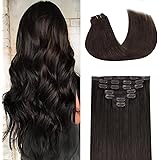
Beyond texture, hair density refers to the number of hair strands per square inch of scalp, commonly categorized as “thin,” “medium,” or “thick,” and is distinct from the thickness of individual strands. Hair color, while seemingly straightforward, encompasses a rich spectrum beyond blonde, brunette, and redhead, including “auburn,” “jet black,” “platinum blonde,” and various shades of “silver” or “gray,” whether natural or artificially induced. A nuanced understanding of these descriptive terms provides a comprehensive framework for discussing and evaluating specific hair attributes, essential for effective communication in any grooming context within English language learning.
5. Broader Grooming Expressions: Integrating Hair Vocabulary into Daily Discourse
The integration of hair vocabulary into everyday English extends beyond mere descriptive terms, encompassing a variety of idiomatic expressions and colloquialisms that enrich daily discourse. The phrase “a bad hair day,” for instance, is widely understood to signify a day when one’s hair is unruly or uncooperative, but it has metaphorically expanded to describe any day characterized by minor frustrations or general misfortune. Such expressions highlight how language often evolves, embedding specific concepts within broader, more abstract meanings.
Another common idiom, “to let your hair down,” originally referred to the literal act of unpinning or untying one’s hair, but it is now almost exclusively used metaphorically to mean relaxing completely and behaving in a free, uninhibited manner. This transformation in meaning illustrates how cultural practices influence linguistic development, creating colorful expressions that might seem opaque to non-native speakers initially. Understanding these nuances is crucial for learners to fully grasp the communicative power of English, beyond literal word translation.
Moreover, specific conditions like “split ends,” where the hair shaft divides at its tip, are frequently discussed in the context of hair health and maintenance, necessitating regular trims. A “receding hairline” describes the gradual loss of hair from the forehead area, a common concern for many individuals. Engaging with these practical and idiomatic uses of hair vocabulary not only broadens a learner’s lexicon but also provides deeper insight into cultural aspects of personal appearance and social expression, ensuring a robust comprehension of English.
Brush Up Your Hair Vocabulary: Q&A
Why is it helpful to learn English words about hair?
Learning hair vocabulary helps you talk clearly about personal grooming and daily hair care routines, improving your overall English fluency.
Besides ‘messy,’ how else can I describe untidy hair?
You can use words like ‘tousled’ or ‘disheveled’ for hair that is naturally untidy. For severely tangled hair, you might say it is ‘knotted’.
What are some basic actions for taking care of hair?
Common actions include ‘combing’ to detangle, ‘brushing’ to smooth, and ‘grooming’ which encompasses washing, conditioning, and styling.
What are some common tools used for hair?
Basic tools include ‘combs’ for detangling and ‘brushes’ for smoothing. ‘Hairdryers’ are used to dry hair, while ‘curling irons’ or ‘straighteners’ change its texture.